Recent reports showing stunting on the rise again in Malaysia have reignited concern—and rightly so. Stunting is not simply about a child being shorter than expected. It is a sign of chronic undernutrition that can permanently affect physical growth, brain development, learning ability, immunity, and long-term health.

Glory Viapude, Manager of Programmes Quality and Impact at World Vision Malaysia
What makes the issue even more worrying is that Malaysia is not a low-income country. Yet today, around 1 in 5 Malaysian children are stunted. In some rural and underserved areas, the situation is far worse.
This is more than a public health problem. It is a warning sign about the future of our children—and the future strength of our nation.
But while the headlines can feel bleak, there is also evidence that stunting can be reduced, even without massive budgets or sweeping new policies. In some places, communities themselves are proving that change is possible.
A Sabah Community Shows Stunting Can Be Reduced
In rural Sabah, a small-scale study in 2025 revealed encouraging progress. Stunting among children under five dropped from 40.6% in 2022 to 29.3% in 2025. Among children aged 12 and below, it fell from 29.9% to 23.8%.
While these numbers remain higher than the national prevalence reported in the National Health and Morbidity Survey (NHMS) 2022, what stands out is the direction of change—and how it happened.
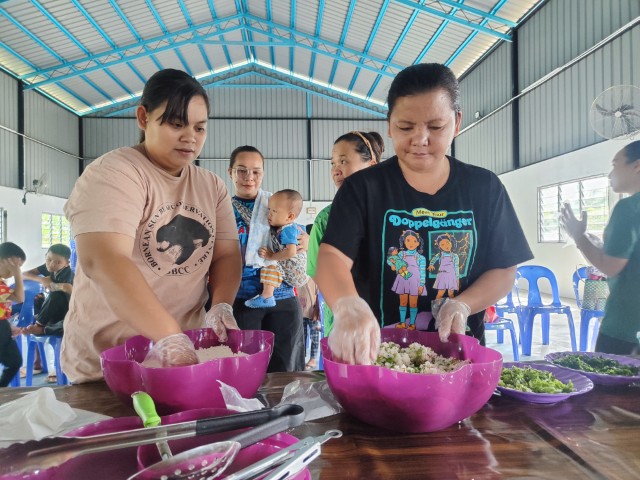
Community health volunteers leading a Mothers’ Cookimg Group session, teaching mothers how to prepare nutritious meals
The improvement was not driven by major new infrastructure or top-down interventions. Instead, it was made possible through the steady efforts of community volunteers, working closely with local health clinics and supported by an NGO, World Vision Malaysia.
The key lesson is simple: the solutions to malnutrition often already exist within communities. What is needed is support, coordination, and the right tools to turn awareness into action.
Malaysia’s Malnutrition Crisis Is More Complicated Than Hunger
Malnutrition is often linked with poverty, but it affects all income levels. Malaysia is facing the double burden of malnutrition, where undernutrition and obesity exist side by side—sometimes even in the same household.
Across communities, children may be stunted, underweight, or overweight. This is driven by poor diet quality, rising food prices, and unhealthy food environments.
Some children do not get enough milk, fruits, and vegetables. Others consume diets high in sugar and ultra-processed foods but low in nutrients. A child may look “well-fed” but still be malnourished.
The long-term consequences are serious: weaker school performance, poorer cognitive development, lower productivity as adults, and greater risk of non-communicable diseases. When large numbers of children are affected, the impact is felt not only in families but also in the country’s human capital and economic resilience.
Why Policies Alone Don’t Reach Every Child
Malaysia has introduced important measures such as the sugar tax and national strategies to address child malnutrition. These efforts are necessary. But recent trends suggest that policies alone are not enough to prevent the problem from worsening.
Real change must reach the household level. Parents and caregivers need practical guidance. Children need healthier environments. Communities need consistent support—not one-off campaigns.
That is where community-led approaches can make a real difference.
Community Health Workers: The Quiet Frontline of Change
In the Sabah experience, voluntary community health workers played a key role. These individuals are trusted by families, understand local culture, and can reach households that formal systems may not consistently reach.
Malaysia already has community-based platforms such as MyCHAMPION and KOSPEN, showing that the foundation exists. The results from Sabah reinforce that when community health workers are equipped with knowledge and confidence, nutrition outcomes can improve.
They helped families understand basic but essential practices, such as:
- how to prepare balanced meals using affordable local ingredients
- proper feeding for young children
- hygiene practices to reduce infections that worsen malnutrition
- growth monitoring and early identification of warning signs
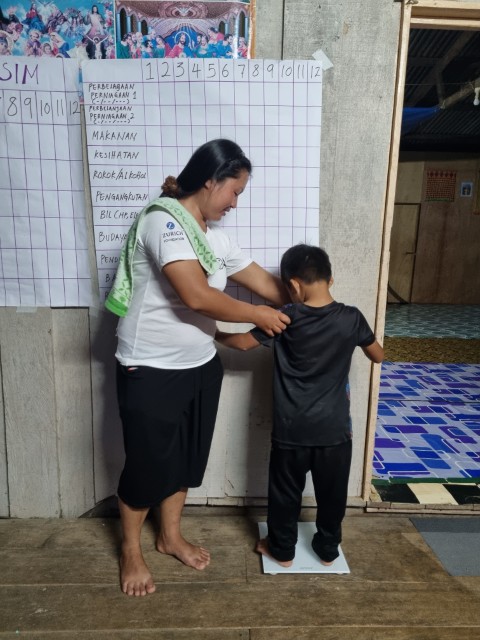
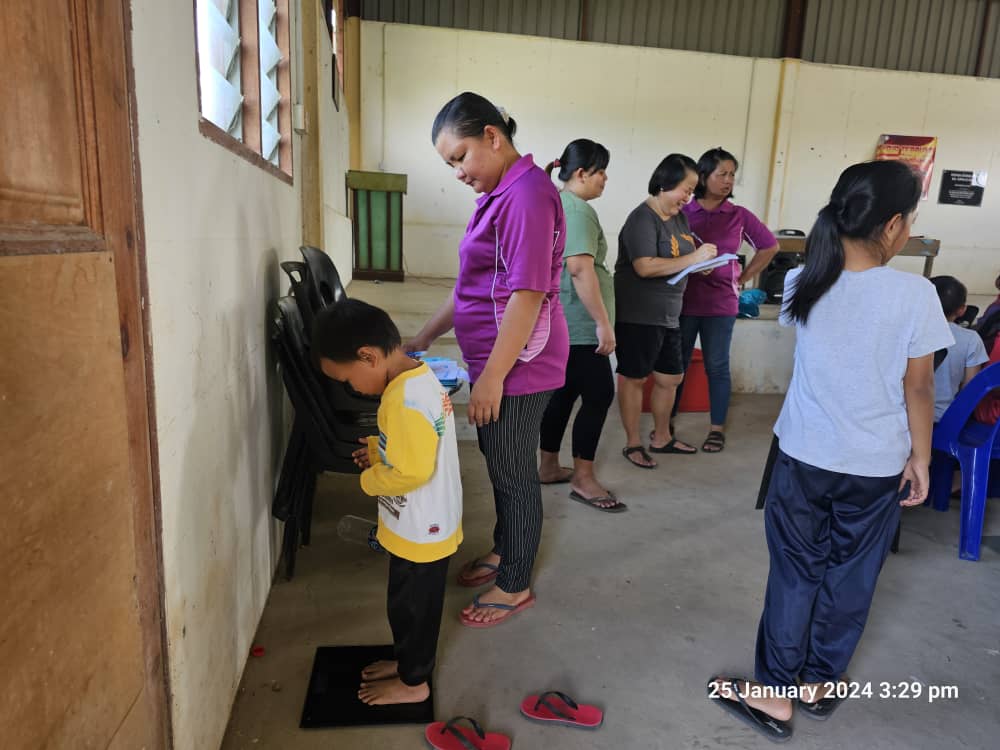
Community health volunteers conducting the annual child weighing exercise
Most importantly, they maintained consistent engagement with families over time, building trust and encouraging sustainable habits.
Global evidence also shows that community health workers—paid or volunteers—are among the most cost-effective approaches to improve child health and nutrition. But for them to succeed, they must be properly supported.
Volunteers Cannot Do It Alone
Many community health workers are unpaid or lightly supported. They often balance family responsibilities and livelihoods while trying to serve their communities. Without proper incentives, and recognition, sustaining this work becomes difficult.
If Malaysia is serious about reversing stunting trends, community health workers should not be treated as an “extra.” They should be strengthened as part of the national health ecosystem through clearer structures, support systems, and meaningful investment.
This is not charity spending. It is an investment in a frontline workforce that helps prevent long-term healthcare costs and lifelong disadvantages for children.
Nutrition Improves Only When the Environment Improves
Even the most committed volunteer cannot educate families into healthier diets if nutritious food remains unaffordable or unavailable.
That is why community-based efforts must be supported by healthier food environments—especially around schools. If school canteens and nearby shops are dominated by sugary drinks and cheap processed snacks, children will continue to eat what is most accessible.
Community health workers can also play a role in advocating for healthier surroundings, such as:
- improved school food options
- community gardens and local food initiatives
- nutrition awareness activities for parents
- stronger monitoring and referrals for at-risk children
When national strategies align with local action, progress becomes far more achievable.
The Way Forward Starts Close to Home
Stunting is not just a health issue. It is a children’s development issue, an education issue, and a national future issue. It reflects inequalities in access to nutritious food, information, and supportive environments.
If Malaysia wants to reverse the worrying rise in stunting, solutions must extend beyond policy and into everyday life. Communities must be empowered as active partners—not passive recipients.
The Sabah experience shows that with consistent support, local health workers can help families improve child nutrition and reduce stunting.
Because sometimes, the strongest solutions are not found in new policies—but in strengthening the people already working quietly on the ground.